
For the fiscal ended 2021, the group has made a loss of Rs 5,943 crore on sales of Rs 11,723 crore, a drop of 66 per cent over fiscal 2020. The group's total debt was up by 7 per cent to Rs 20,742 crore.

However, it may still not change its stance on the policy rate as inflationary pressures are coming from high commodity prices.

The amount you can raise via a gold loan is higher than you can get via a personal loan.

The Commission observed vulnerability of junior untrained staff on probation and their misuse by senior officials.
Amendments would be required in the Banking Companies (Acquisition and Transfer of Undertakings) Act, 1970 and the Banking Companies (Acquisition and Transfer of Undertakings) Act, 1980 for privatisation, sources said.

Kamalesh Chandra Chakrabarty has joined Punjab National Bank as its executive director and K Ramakrishnan has taken over as executive director of Bank of Baroda.

The amounts were transferred from HDFC Bank to BoB.

Emerging markets such as India have always run higher inflation rates than developed economies such as the US and countries of Western Europe. But for the first time in the past 30 years, the US reported a higher consumer price inflation (CPI) rate than India in five consecutive months. The US reported a CPI rate of 7.5 per cent in January 2022 against 6.01 per cent in India and analysts expect the trend to continue for at least a few months more
Why are investors gung-ho about State Bank? asks Tamal Bandyopadhyay.

Ananthasubramanian, 55, started her career in 1982 at Bank of Baroda as a specialist officer in the planning stream.
Bank of Baroda is slated to change its logo on June 6 as part of its brand implementation road map, a move that may require the profit making bank to spend about Rs 600 crore (Rs 6 billion).

Sidbi acquires Ahmedabad-based start-up at hefty premium; founders deny link to govt.

Armed with court order, a consortium of lenders led by SBI can now sell certain real estate properties and securities belonging to fugitive Vijay Mallya to recover loans turned bad with failure of Kingfisher Airlines. A consortium of 11 banks that gave Mallya loans, led by State Bank of India (SBI), had approached a special Prevention of Money Laundering Act (PMLA) court seeking restoration of his properties seized by the Enforcement Directorate. The special PMLA court in Mumbai on Tuesday allowed the restoration of properties worth Rs 5,646.54 crore to banks.

State Bank of India reported 544 cases of such frauds that caused a loss of Rs 191,295 lakh

The interest rate offered by PSBs like SBI, BoB and BoI hover around 8.9 per cent-10.50 per cent. For private banks, the range is between 10.49 per cent and 12 per cent.
The review will help all the banks find if there is any loophole.
Bank of Baroda will complete 50 years of operations in African nations, Kenya and Uganda, in December, even as it plans to foray into China and Malaysia.

The branch managers have come out of their glass cabins and the sellers' market has transformed into a buyers' market, but there is no end to the harassment of customers, asserts Tamal Bandyopadhyay.

MCA blamed its financial troubles on non-receipt of payments from the Board of Control for Cricket in India for the last 10 months.

The Reserve Bank on Monday superseded the boards of Srei Infrastructure Finance as well as Srei Equipment Finance, citing concerns over governance and payment defaults, and decided to refer the two NBFCs for resolution under the insolvency law. This is only the second time in as many years that the Reserve Bank of India (RBI) is referring entities for the resolution process under the Insolvency and Bankruptcy Code (IBC) after taking first ever such step in the case of DHFL back in 2019. Superseding the boards of the crisis-hit Srei Infrastructure Finance Limited (SIFL) and Srei Equipment Finance Limited (SEFL), the RBI has appointed Rajneesh Sharma, former Chief General Manager of Bank of Baroda as the administrator to manage the affairs of the two companies.

This is part of the first batch of Supplementary Demands for Grants for 2020-21 moved by Finance Minister Nirmala Sitharaman in the Lok Sabha.

Loans for Indian airlines have dried up as banks have become cautious to lend to the sector.
If the banks throw caution to the winds for building loan books, the hydra-headed bad loans may resurface and spoil the party, warns Tamal Bandyopadhyay.

Since its launch in April, helpline 155260 has been able to prevent more than Rs 18.5 million of defrauded money from reaching the hands of fraudsters.

As per norms, sanction for prosecution of government employees accused of corruption has to be given within four months' stipulated time.

Do not go for riskier options like co-operative bank only for the higher return. Even if you go for them, park only a small portion of your capital there, say Tinesh Bhasin and Sanjay Kumar Singh.

Not all public sector banks are back in the black, but their collective net profit for the year is Rs 32,346 crore against a Rs 9,013 crore loss in the previous year, points out Tamal Bandyopadhyay.

The country's largest lender State Bank of India will get the largest sum of Rs 8,800 crore as government's capital infusion.

As many as 104 listed companies have fewer independent directors than mandated by the regulations, according to the figures from Prime Database, reports Sachin P Mampatta.
In his first monetary policy review since taking office on September 4, RBI Governor Raghuram Rajan increased the repo rate by 25 basis points to 7.50 per cent.

An executive director of a bank could, for example, be elevated to the post of chairman of a different bank.
Why banks are going hammer and tongs behind defaulters.

A consortium of Indian banks led by the State Bank of India (SBI) returned to the High Court in London for a bankruptcy application hearing against liquor tycoon Vijay Mallya, as they pursue the recovery of debt from loans paid out to his now-defunct Kingfisher Airlines. At a virtual hearing before Chief Insolvencies and Companies Court (ICC) Judge Michael Briggs on Friday, both sides deposed retired Indian Supreme Court justices as expert witnesses on Indian law in support of their arguments for and against a bankruptcy order against Mallya in the UK. While the banks argued a right to waive their security over the Indian assets involved in the case in order to recover their debt in the UK, lawyers for the 65-year-old businessman argued that the funds in question involved public money held by state-owned banks in India which precluded them from such a security waiver.
'Pump prices of petrol and diesel have reached historical highs. An unwinding of taxes on petroleum products by both the Centre and the states could ease the cost-push pressures,' the Monetary Policy Committee (MPC) has said.

US-based Oaktree on Monday pipped Piramal Enterprises and Adani Group to emerge as the highest bidder for DHFL after fresh bids were invited under the insolvency process, according to sources. The committee of creditors had fixed December 14 as the last for submission of revised bids. According to the sources, Oaktree raised the bid to Rs 36,646 crore, including Rs 1,000 crore for insurance and Rs 3,000 crore of interest earned, while Piramal Enterprises offered Rs 35,550 crore, including Rs 300 for insurance and Rs 3,000 of interest earned.

Ajit Mishra, vice president, Research, Religare Broking, answers your queries.

There is no direct impact of the Russia-Ukraine crisis on India in terms of bilateral trade but a surge in oil prices poses considerable risk to the economy, an analyst report said on Friday. International oil prices which have surged past $100 per barrel "pose risks to external stability and currency movement," a Bank of Baroda Economics Research report said. Russia has launched military operations against Ukraine, stoking fears of significant disruption in the region, including loss of life. The West is ramping up financial sanctions against Russia and support for Ukraine.
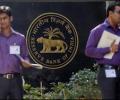
Aspirants banking on experience and domain knowledge of veterans
